Roof Leak Water Damage in Round Rock, TX
The hail hit at dinner and sounded like gravel on a drum. The next morning the roof looked fine from the driveway, but three weeks later the first big rain put a wet spot on the upstairs ceiling and a drip down the inside of the window frame. The hail cracked the shingles where nobody could see, and the water found the crack. This site routes your call to an independent local provider who handles roof leak water damage inside Round Rock and Williamson County homes.
The roofer stops the rain, and then the inside job starts
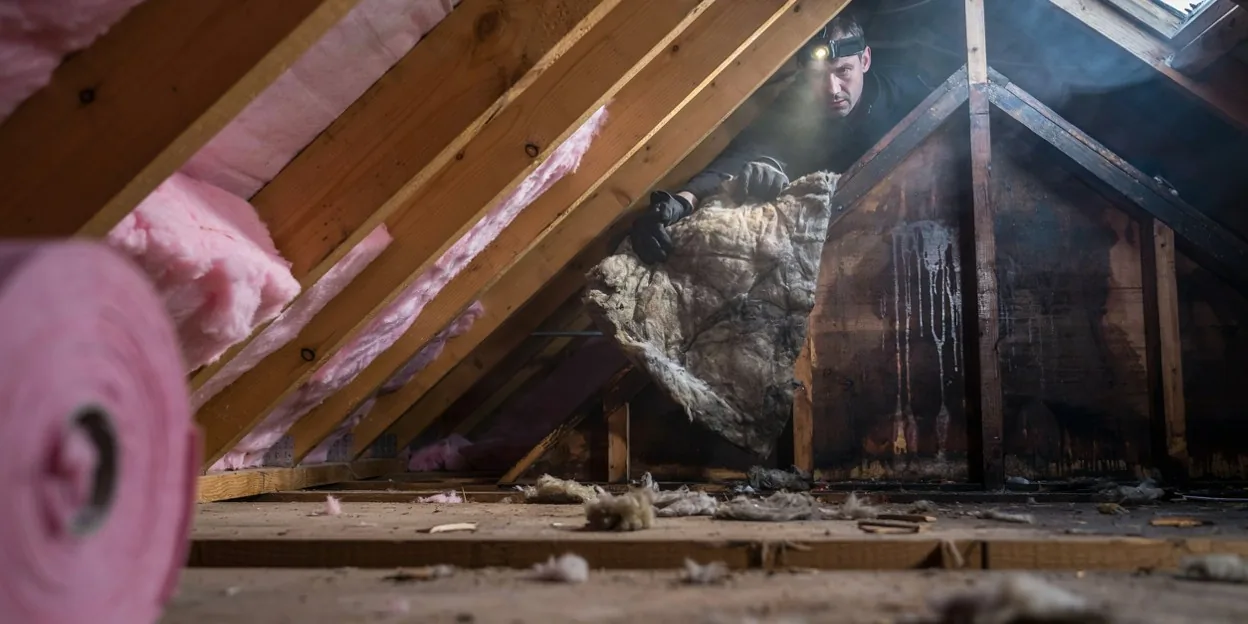
A roofer tarps the opening and later replaces the shingles or the decking. That is the outside job. The inside job is everything the water reached on its way down: the insulation, the ceiling drywall, the wall the water followed, and the flooring under the drip. The provider goes into the attic with a light and a meter, maps the wet insulation and decking, and follows the water down. Wet insulation comes out. Ceiling and wall drywall gets metered, and the wet sections are opened or dried in place depending on the readings. Structural drying equipment goes into the attic and the rooms below.
What to do the night the roof lets go
Put a bucket under the drip and move the furniture. If the ceiling is sagging, drain it through a small hole with a screwdriver so it does not come down whole. Turn off the breaker to any wet light fixture. Do not go on the roof in the rain. Call a roofer for the tarp, and photograph the ceiling, the attic if you can reach the hatch, and the roof from the ground. Then call here about the inside.
What a roof leak ruins and what it only wets
Blown insulation that got wet comes out. Ceiling drywall that sagged or stayed wet for weeks comes out. Drywall with a stain and a dry reading can be sealed and painted. Roof decking usually dries once the tarp is on and air is moving in the attic. Laminate under the drip swells and is replaced; carpet may be saved if it dried fast. Ask the crew to show you the readings behind each decision.
Hail in April, a tornado in March, and the roofs of Round Rock
Williamson County sits in the part of Texas that gets hail every spring, and a storm with golf-ball hail cracks shingles that will not leak until the next hard rain. On March 21, 2022, an EF-2 tornado ran 29 miles from near Wells Branch through Round Rock toward Granger and took roofs off homes in Windy Terrace, Greenlawn Place, South Creek, and Forest Bluff, and the rain that came with it went straight into those houses. Even a year later some of them were still being rebuilt.
Most Round Rock roofs from the 1990s and 2000s subdivisions are composition shingle on a hip roof, and the valleys, the pipe boots, and the flashing around the chimney are where the leaks start when the shingles look fine. If the stain is under the attic air handler rather than under a valley, the source may be condensate and not rain, and ceiling water damage repair covers that. If the water came under the door instead of through the roof, read flash flood cleanup.
Wind and hail damage to the roof and the water damage it causes are usually treated as sudden losses under Texas policies, often with a separate wind and hail deductible. A roof that leaked for years through worn shingles may be treated as maintenance. The crew's photos of the attic and the readings on the ceiling are what the adjuster will read.
Call about the drip that started after the storm
Have the address ready and be ready to say when the roof was damaged, whether it is tarped, and which rooms are wet. Mention a sagging ceiling. Call (512) 562-9101 and tell us what came through.